
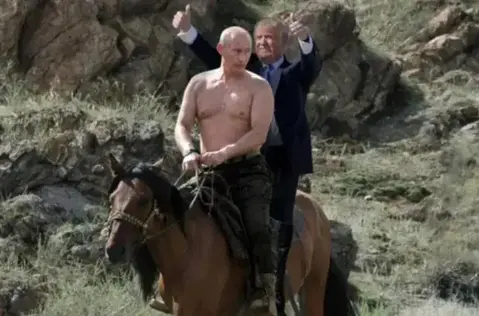
 For a generation of Americans—especially younger ones—who’ve grown up with Donald Trump constantly on their screens, it’s time for a quick reality check. This isn’t normal. It never was. And if you’re having trouble picking up on the tells, don’t worry, we got you. It only takes the soundbites around a relationship with one other foreign leader to spot emotional immaturity, manipulation tactics, and the kind of language that reveals a person’s insecurities. Call it the ‘Vlump Effect’—when bravado, flattery, and grievance replace wisdom, humility, and teamwork.
Let's warm up by exploring this in terms anyone can understand: Imagine your high school is holding an election for senior class president and one of the candidates gets up wearing a T-shirt with his face on it and says:
“Hey, um... yeah, this kid’s clearly not right in the head.” Now, imagine that same kid not only wins—but starts selling hats with his own number in the sequence of school presidents on them. And he uses the money to buy new rims for his Escalade. TV and movies know this storyline by heart. It’s the classic “wrong guy in charge” plot. Writers have played it for laughs for decades:
But here’s the thing—it’s supposed to be a joke. We’re not supposed to actually hand the nuclear codes to the guy who speaks in awkward, self-inflating observations, and rages on his own social media site. Like this: “I can end that war in 24 hours.” “He’s a strong guy. He’s got control.” “He said he didn’t interfere… I believe him.” “Vladimir, STOP!” (Truth Social post) “He’s gone crazy.” “We’re taking a lot of bullshit from Putin.” “He’s tapping me along. “I thought we had a deal.” “Don’t ask me a question like that.” “We’re sending 17 Patriot batteries.” “It’s not my war.” “I’m disappointed in President Putin.” “We don’t need the sanctions bill.” “The talk doesn’t mean anything.” “I speak to him a lot… then the missiles come.” The Takeaway: For the Kids Who Grew Up With This If this is what you’ve seen for most of your life, let's be clear: This is not normal. This is not maturity. This is not strength.
Now, let's see if you can spot the psychological “tell” behind the soundbite. Like a CIA profiler watching body language. Like a poker player watching someone bluff. It’s not just what they say—it’s why they say it, and what it reveals. Here's how the soundbites above translate: "I can end that war in 24 hours." Psychological tell: Grandiosity masking helplessness. This is what it sounds like when someone sells confidence because they lack competence. "He’s a strong guy. He’s got control." Psychological tell: Idolizing dominance instead of understanding diplomacy. When someone sees strength and skips right over cruelty, they’re not discerning—they’re impressed by force. "He said he didn’t interfere... I believe him." Psychological tell: Ego responding to flattery, not evidence. If someone trusts a liar because the lie makes them feel important, they’re showing you their weakness in real time. "Vladimir, STOP!" Psychological tell: Mistaking attention for influence. They think yelling into the void = being heard. It’s not strength. It’s self-soothing. "He’s gone crazy." Psychological tell: Projection. When someone calls you crazy for setting a boundary, it’s usually because they can’t tolerate not being in control. "We’re taking a lot of bullshit from Putin." Psychological tell: Personal humiliation dressed up as moral outrage. If they care more about being disrespected than lives being lost, their compass is ego—not ethics. "He’s tapping me along." Psychological tell: Victimhood disguised as insight. They realize they’re being played, but won’t stop playing the game. That’s not wisdom. That’s addiction to approval. "I thought we had a deal." Psychological tell: Narcissistic entitlement. Assumes the world should work like a private transaction—with them at the center. "Don’t ask me a question like that." Psychological tell: Fragile ego under pressure. When someone can’t handle a basic question, it’s not because you’re rude—it’s because they’re unprepared. "It’s not my war." Psychological tell: Disassociation from responsibility for horrific events. When someone shrugs at suffering because they didn’t cause it, they’re telling you: 'I don’t lead—I react.' "I’m disappointed in President Putin." Psychological tell: Infantilizing evil. When someone calls atrocities a “disappointment,” they’re emotionally buffering to protect themselves from reality. "I speak to him a lot… then the missiles come." Psychological tell: Magical thinking meets powerlessness. The belief that talking = control is a hallmark of someone who confuses access with influence. "We’re sending 17 Patriot batteries." Psychological tell: Performance over policy. Grand declarations without logistics are how insecure leaders simulate action to look decisive. "We don’t need the sanctions bill." Psychological tell: Avoidance of real consequences. They don’t want to act because action might disrupt their deals, their ratings, or their fragile alliances. "The talk doesn’t mean anything." Psychological tell: Jaded disillusionment without accountability. If they finally admit it’s not working but change nothing, it’s not wisdom—it’s cynicism that protects the ego. To be very clear, this observation isn’t about left or right. It’s about the human wiring behind bad leadership. What we normalize now is what future generations will inherit as “just how leaders talk.” But you can fix it. You can learn the tells. Because real leadership isn’t loud. It’s not merch. It’s not all about “me.” It’s what shows up when the talking stops and the decisions actually begin. ------------------------------------------------------------------------------------------------------- PART 2: Signs the BS is infecting everyone around him, too. You'll know it's all gone completely sideways when the supporting cast (like his cabinet) starts delivering more and more lines that sound less like policy and more like hyperbole, too. Here are a few telltale phrases to watch for from the supporting cast: “He’s the strongest negotiator the world has ever seen.” → Translation: I haven’t read a briefing, but I memorized the fan club slogans. “Nobody could have done what he did.” → Classic cult-of-personality line. Often deployed in response to… nothing measurable. “The media just hates how much he’s winning.” → That’s not analysis. That’s a grievance echo—usually said right before dodging a real question. “He’s playing 4D chess.” → Always said by someone who’s playing checkers… poorly. “He’s just saying what we’re all thinking.” → More often, he's saying what angry uncles say at Thanksgiving before being told to go outside. What you'll notice is that these soundbites will rarely be policy points. They’ll be performances that indicate a psychological environment where loyalty is measured in praise, not action, and where truth is whatever keeps the base clapping.
0 Comments
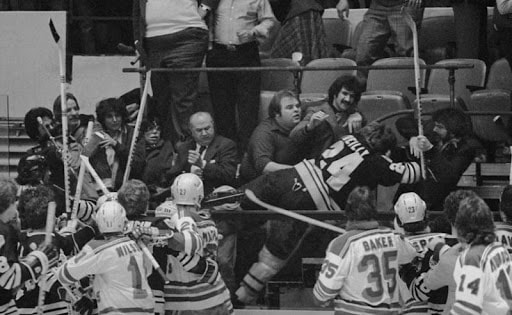 You seen this crap? The New York Times puts out a Guide to Courage in the Fight for Democracy, but it’s behind a paywall. Because nothing says “stand up for freedom” like “click here and give us $12.99/month.” Meanwhile, Rosie O’Donnell is the only one dropping her gloves to fight back publicly? Don’t get me wrong, Rosie probably throws a decent punch—god knows she’s taken a few—but are we really gonna let her be the Terry O’Reilly of the resistance? Christ.
It’s time to drag your buddies off the golf course and Pornhub, wipe the Cheeto dust off your fingers, and get in this game. And BTW, it’s not republicans vs democrats, or conservatives vs liberals, this is about the protectors standing up to the bullies. Need some additional inspiration? Here’s the Boston American version of the courage guide. No paywall. No rants. No BS. Dig in: 1. We’re Down, Guys. Not Out. Think of this moment in American history like a 2-1 game in the second. The next goal changes everything. Yeah, democracy’s under pressure—voter suppression, disinformation, corruption—but this game is far from over. Don’t act like we’re getting smoked 6-1. Act like one gritty shift can flip the momentum. Sulking by your locker ain’t a strategy. Get out there. Out-skate ’em. Out-hit ’em. The game is still on. 2. Throw Your Weight Around—Clean, Hard, Legal Hits Time to send out the bruisers and set the tone. Not with cheap shots, but with hits that rattle the boards—lawful protest, real conversations, letters that get read. If that’s not your style, just freakin’ speak up! Challenge lies. Back your best players. Show your kids how to lean in and push back with purpose. Truth is our hip check. Decency is our forecheck. And if we keep hitting hard and often, they’ll cough it up. 3. Let’s Adjust the Lines—Use Our Depth Chart It’s time to quit waiting for another Obama or Taylor Swift TikTok to “save democracy.” It’s not about the stars. It’s the grinders who make the difference—teachers, veterans, nurses, dads in flannel who know how to fix a furnace and call a congressman. If you’ve got a voice, a vote, or a pair of shoes, you’re on the team. 4. Let's Play With a Full Bench—Build Coalitions We don’t win with one superstar line. We win when everyone’s covering for each other. We need cross-aisle, cross-class, cross-race line changes. You don’t have to love each other, but you’ve gotta move in the same direction. Forget purity tests. If someone wants to skate with us toward truth and stability, let ’em in. 5. Own the Crowd—Get the Barn Loud Crowds change games. Same with towns, classrooms, bars, bakeries, and community centers. Apathy is silence, and silence is surrender. Support local news. Show up. Get informed. Get loud in ways that matter. This isn’t about echo chambers—it’s about volume. Let the other side know the Garden is rockin’. 6. Outsmart the Opponent—Not Just Out-Hit Them Anyone can throw an elbow. What wins in the end is the grit combined with a playbook. Strategy. Coaching. Systems. Don’t just scream at the TV—fund media literacy, teach your kids civics, write a blog that attempts to relate a hockey game to the fight for democracy.... . Every time the bullies go full chaos clown, we respond with focus. Out-organize. Outlast. Outthink. And win. 7. Protect the Stars—But Don’t Worship Them We need to protect the people who do the hard stuff—journalists, whistleblowers, judges, elected officials. But they still have to deliver. Nobody’s above scrutiny. That’s the whole point of the damn game. Cheer 'em on, sure. But don’t kneel at their altar. You wouldn’t let your top line skate lazy just because they’ve got name recognition. 8. Kill the Penalty, Then Make Them Pay Sometimes we get screwed. Bad calls. Voter suppression. Court rulings that make your blood boil. Fine. Kill the penalty. Stay out of the box. Stay confident and locked in. Then respond by scoring where it counts. Organize better. Vote harder. Flip the next shift. Show the bastards you’re not broken—you’re coming back twice as sharp. 9. Finish the Game Strong You don’t coast through two periods and hope for a miracle. Every election matters. Every town hall. Every school board. This isn’t preseason. It’s game time. If you’re breathing, you’re playing. Stop thinking someone else is gonna take the last shift for you. They’re not. It’s your turn. 10. Never Judge Your hedge fund neighbor might be an ass around the grill, but he’s probably just as worried as you are about whether his kids and grandkids are gonna need to know where the nearest bomb shelter is someday. This ain’t about left or right. It’s about whether we’re gonna work together and save what we’ve ALL worked so damn hard for. It’s your shift. Get on the ice. —The Boston American |
Archives
January 2026
Categories |
 RSS Feed